THE Sustainability Impact Ratings 2027
14 Juli 2025
3 menit
Dilihat 0x
Telkom University Puts Its Energy Efficiency Plan into Action
Bandung, Indonesia – Telkom University has a clear plan to use less energy across its campus. Guided by its Digital Green Campus Masterplan, the university combines efficient building technology, smar...
SPenulis: SDGs Center

Bandung, Indonesia – Telkom University has a clear plan to use less energy across its campus. Guided by its Digital Green Campus Masterplan, the university combines efficient building technology, smart monitoring, renewable energy and everyday energy-saving habits to bring down its overall consumption. With campus buildings using more than 6.7 million kWh of electricity in 2024, every saving counts, both for the budget and for the climate.
A Plan Built on Measurement
The Digital Green Campus Masterplan is the university's roadmap towards a smart and environmentally responsible campus, and energy efficiency is one of its core goals. To check how well the plan is working, Telkom University uses the UI GreenMetric sustainability framework, which assesses performance in areas such as energy, waste, transport and education.
The plan starts from knowing how much energy the campus uses. Electricity consumption in campus buildings is monitored and recorded, and in 2024 it reached 6,731,192 kWh. Because electricity is also the largest source of the university's carbon emissions, cutting consumption is at the heart of its energy efficiency and conservation programme.
How the Campus Saves Energy
The energy efficiency and conservation programme focuses on the buildings where energy is used every day. Campus buildings use energy-efficient LED lighting and more efficient air conditioning and HVAC systems. Electrical equipment runs on schedules so that it is not left on when it is not needed, and energy use is monitored and controlled across buildings.
Smart technology helps make these savings automatic. The Intelligent Energy Management System (IEMS), developed by the Faculty of Electrical Engineering, uses Internet of Things technology to monitor electricity use in real time and to regulate lighting, air conditioning and other systems. IoT sensors installed across campus facilities track consumption patterns and detect waste, giving the university the data it needs to keep improving. Today, buildings that meet the university's smart building criteria make up 89.22% of the total building area of 289,831 square metres.
People play their part too. Awareness campaigns encourage students, lecturers and staff to switch off lights, air conditioners and electronic devices when they are not in use, so that saving energy becomes part of daily campus life.
Cleaner Power and Cooler Buildings
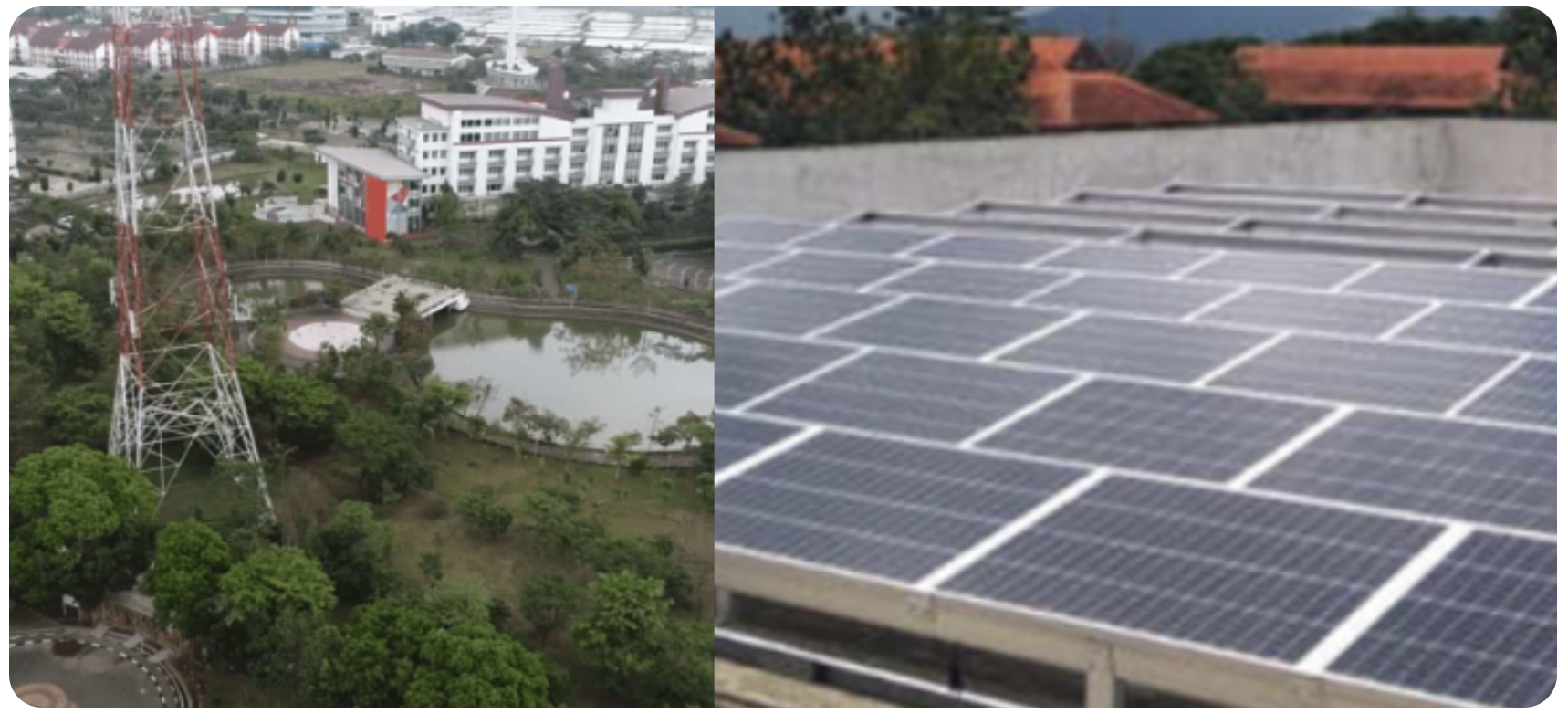
Alongside using less energy, the university is producing some of its own clean power. Rooftop solar systems of 6,000 VA each run on the Faculty of Electrical Engineering building and on the Faculty of Engineering's genset building, and on-grid solar photovoltaic systems are being developed at other campus facilities. A prototype wind turbine is being piloted to power small loads such as indoor lighting, and a biogas power plant turns biodegradable waste into electricity. Through its sustainable energy research centre, the university is also exploring biogas, hydrogen and energy storage. For its operational vehicles, Watergazz technology improves the air-fuel mixture in engines to reduce fuel use.
Nature helps as well. Nine campus forests, urban green spaces and rooftop gardens provide shade and lower surrounding temperatures, which reduces the need for artificial cooling and supports the university's energy saving goals.
Saving Energy for a Sustainable Future
By combining a clear masterplan, regular measurement, efficient technology, renewable energy and the participation of the whole campus community, Telkom University is working steadily to reduce its overall energy consumption. These efforts support SDG 7 on Affordable and Clean Energy, SDG 11 on Sustainable Cities and Communities and SDG 13 on Climate Action, and they show how a digital campus can also be an energy-efficient one.
#THE Sustainability Impact Ratings 2027
Bagikan Artikel
0Komentar