Kumpulan update dan informasi terkini seputar SDGs.
2 SDG dipilih
Rivers, canals and coastlines do not stop at a university's boundary, and neither does Telkom University's work to protect them. In 2024 and 2025, its lecturers and students worked side by side with riverbank residents, village governments, fishing communities and turtle conservation groups to look after the waters they share. The collaborations range from the Cikapundung River watershed, which feeds the irrigation canal running through the campus, to neighbouring villages in Dayeuhkolot and Bojongsoang and coastal communities in East Java, Yogyakarta and Lampung. They are funded through the university's community service grants, the Ministry of Education, Culture, Research and Technology, and Telkom Indonesia's Innovillage and CSR programmes.
elkom University treats every type of wastewater on campus according to its characteristics before the water is reused or discharged. The aim is to uphold water quality and protect the ecosystems, wildlife and people downstream. The campus now runs 22 wastewater treatment installations covering its 53 designated wastewater management locations. Toilet, laboratory, cafeteria and rain water each follow a different treatment route, and much of the treated water is reused on campus instead of being released.
elkom University researchers are working directly to monitor, map and protect aquatic ecosystems and the species that live in them. Projects funded in 2024 and 2025 range from listening to marine life in the Java Sea to modelling how mangroves in Bali shield the coast from waves. The work is funded through internal research grants, national funding from the Ministry of Higher Education, Science and Technology (Kemdiktisaintek) and the National Research and Innovation Agency (BRIN), and partnerships with universities and companies in Indonesia, South Korea and Malaysia.
Telkom University supported a series of community events in 2025 that promoted the conservation and sustainable use of marine and water resources. The events ranged from sea turtle conservation training on the coast of Yogyakarta to waste literacy and water monitoring workshops in West Java. Most of the events were funded under the university's internal Mentoring and Training (Pendampingan/Pelatihan) scheme for Period I 2025, set out in a decree from the Vice Rector for Research, Innovation and Partnerships. Each of these received Rp4,250,000 in funding.
Telkom University is working to cut plastic waste on campus by targeting its most common source: single-use drinking water bottles. The university has set up drinking water refill points, asks its community to carry their own tumblers, and runs campaigns that remind students and staff to leave plastic bottles behind. The effort is part of the university's wider programme to reduce paper and plastic use, which it reports each year to the UI GreenMetric World University Rankings.
Telkom University is developing technologies with aquaculture businesses, fish farmer groups and government agencies to help them produce more while doing less harm to aquatic ecosystems. The work spans smart water quality sensors, recirculating fish farming, waste-to-fertiliser processing and mangrove monitoring. The projects are funded through internal research and community service grants, the Ministry of Higher Education, Science and Technology (Kemdiktisaintek), Telkom Indonesia's Innovillage programme, the West Java Marine and Fisheries Office (DKP Jabar) and industry partners such as PT Tumbuh Dimana Sadja (AKAR) and PT Helmi Farm Mandiri.
Telkom University prioritises local and sustainable food sources. On 23 June 2025, it signed Kampung Sorgum website licence agreements with Sorgumology StartUp, Komunitas Halal Bandung and KWT Melati Sorgum. Its canteen agreements require local MSME tenants to serve healthy, halal food in degradable packaging, without Styrofoam or packaged drinks, and it is developing Smart Poultry Farming and the IoT- and solar-powered Crabhouse silvofishery programme.
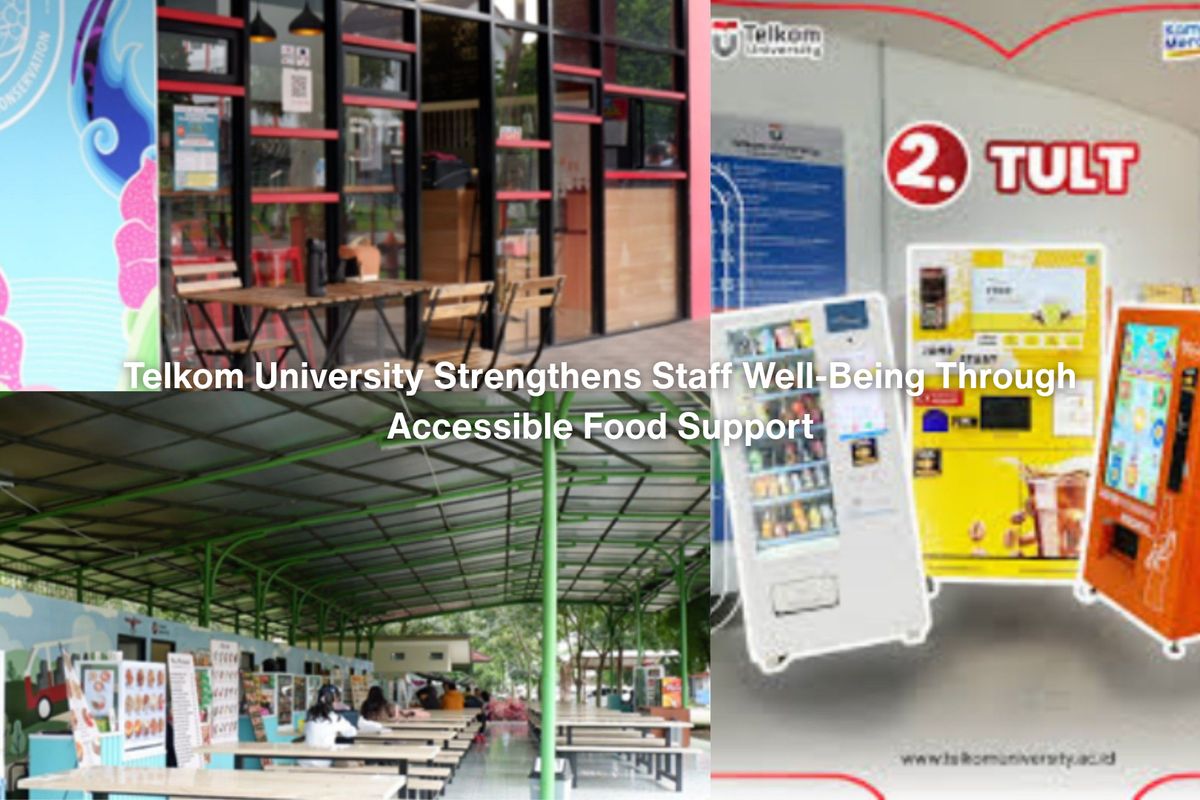
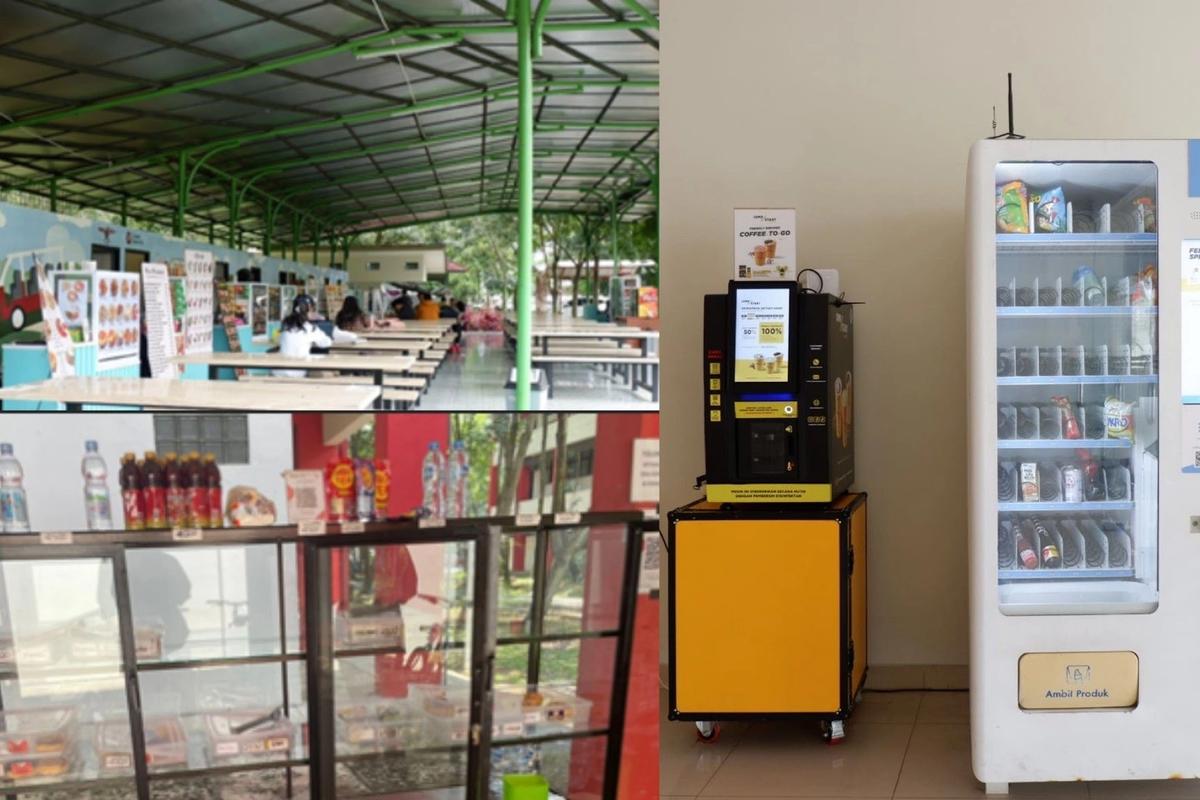
Telkom University supports employee welfare and food security through various workplace initiatives, including food tenants, office pantries, food banks, vending machines, meeting refreshments, and monthly meal allowances. These efforts aim to ensure convenient access to food while promoting a healthy and supportive working environment in line with SDG 2: Zero Hunger and SDG 3: Good Health and Well-Being.
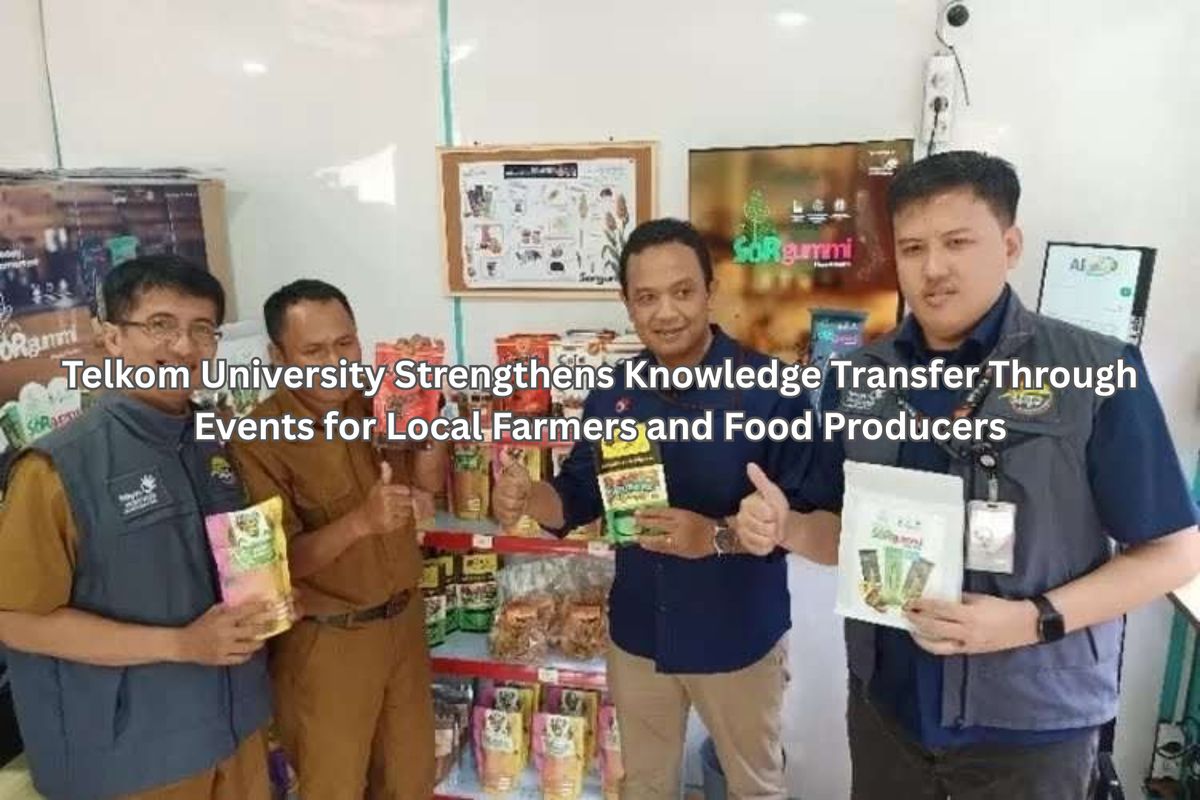
In 2025, Telkom University held at least 24 events for local farmers and food producers across West, Central and East Java, reaching farmer groups, fish farmers, livestock farmers and small food businesses. The events ran from pest and disease education at the Selaawi Agricultural Extension Centre and LoRa-based irrigation training to aquaculture business management, processing of fish, milk and coconut sugar, and halal certification support. They gave local producers practical skills and a place to connect with university experts and with one another, supporting SDG 2, SDG 12 and SDG 14.
Telkom University implements an integrated water management system through groundwater monitoring, rainwater harvesting, wastewater treatment, and water reuse initiatives. Supported by sustainable infrastructure and IoT technology, these efforts aim to conserve water resources, maintain water quality, and reduce environmental impacts in support of SDG 6: Clean Water and Sanitation.
Telkom University strengthens campus food security and student welfare through various initiatives, including free meal programs, affordable dining facilities, nutrition education, and local food innovation. These efforts promote access to safe and nutritious food while supporting SDG 2: Zero Hunger and SDG 3: Good Health and Well-Being.