THE Sustainability Impact Ratings 2026
8 November 2024
2 menit
Dilihat 0x
Telkom University Drives Low-Carbon Innovation Through Green Technology and Sustainable Start-Ups
Telkom University continues to strengthen its role in advancing Indonesia’s low-carbon transformation by nurturing start-ups and research innovations centered on green technology and sustainable energ...
SPenulis: SDGS Telkom UniversitySEditor: SDGS Telkom University
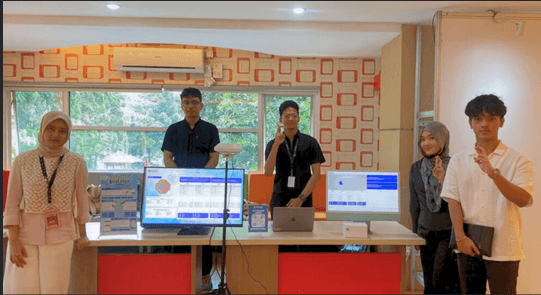
Telkom University continues to strengthen its role in advancing Indonesia’s low-carbon transformation by nurturing start-ups and research innovations centered on green technology and sustainable energy solutions.
Through Bandung Techno Park (BTP), Telkom University provides research funding, incubation, and business acceleration programs that bridge academia, industry, and government to build a sustainable innovation ecosystem supporting national climate goals and climate action (SDG 13).
Green Technology and Sustainable Energy Innovation
Several breakthrough ventures have emerged from this initiative, including:
- Hestia, a smart lamp system that optimizes energy efficiency;
- TelUrator and I-WANT System, waste-to-energy incineration technologies promoting cleaner combustion; and
- Jubelo, an integrated waste-management platform supporting a circular economy.
Other innovations include the Intelligent Energy Management System (IEMS) — an IoT-based solution for real-time energy monitoring and optimization — and the Indoor Air Quality Monitoring System (IAQMS), which measures and controls carbon particle concentrations for healthier indoor environments.
These projects demonstrate how Telkom University combines academic research, entrepreneurship, and environmental technology to create scalable solutions that address energy efficiency, pollution reduction, and carbon management.
Research and Start-Up Collaboration
Telkom University’s research community continues to generate impactful projects and start-up collaborations, further positioning the university as a hub for sustainable innovation.
Examples include Langit Biru, a lecturer–student start-up developing IoT-based air-quality monitoring devices, now deployed in Telkom Indonesia buildings with support from Danantara Indonesia.
Meanwhile, Smash.id, founded by a Telkom University alumnus, provides digital waste-management tools that enhance Waste Bank operations nationwide, contributing to better waste sorting and recycling systems.
Further advancing green innovation, researchers have developed:
- the Smart Zero Waste Bio-Thermal Conversion Reactor and Smart Waste Reactor (SWR) — IoT-powered systems that convert waste into clean energy aligned with Smart City concepts,
- supercapacitors made from activated-carbon composites and NiFe-LDH materials for high-capacity, low-emission energy storage, and
- an IoT-based furnace that transforms organic waste into renewable fuel briquettes.
These projects exemplify Telkom University’s holistic approach to low-carbon innovation, combining technological excellence with entrepreneurial collaboration.
Commitment to a Low-Carbon and Climate-Resilient Future
Through Bandung Techno Park (BTP) and its ecosystem of research funding and business acceleration programs, Telkom University reaffirms its commitment to driving low-carbon innovation, supporting national climate resilience, and promoting sustainable industrial growth.
The university’s initiatives directly contribute to the achievement of both SDG 7 (Affordable and Clean Energy) and SDG 13 (Climate Action) — fostering innovation that reduces emissions and strengthens Indonesia’s path toward Net Zero 2060.
By integrating research excellence, green entrepreneurship, and cross-sector collaboration, Telkom University plays a pivotal role in shaping Indonesia’s transition toward a cleaner, smarter, and more sustainable future.
#THE Sustainability Impact Ratings 2026
Bagikan Artikel
0Komentar