THE Sustainability Impact Ratings 2026
12 April 2024
3 menit
Dilihat 0x
Telkom University Empowers Communities Through Health Outreach and Digital Innovation
Telkom University remains consistent in its mission to enhance public health and well-being through various outreach programs and collaborative initiatives. The university actively involves students, ...
SPenulis: SDGS Telkom UniversitySEditor: SDGS Telkom University
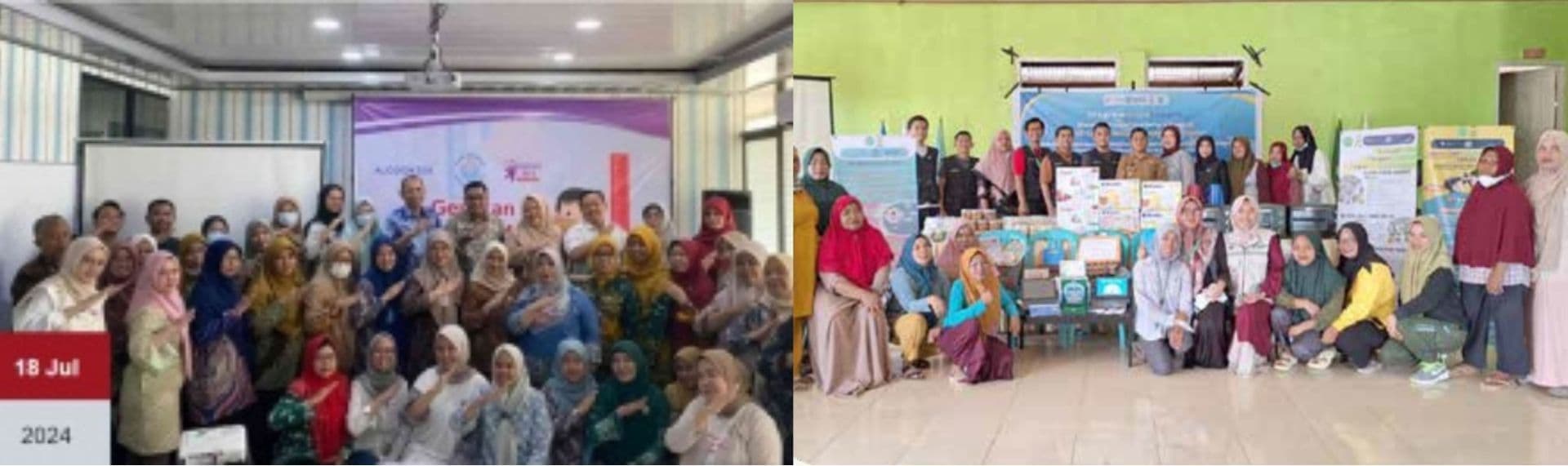
Telkom University remains consistent in its mission to enhance public health and well-being through various outreach programs and collaborative initiatives. The university actively involves students, faculty members, and local partners in projects aimed at improving hygiene, nutrition, mental health, physical activity, and family and elderly welfare. In line with its commitment to inclusivity, these programs have been expanded to also serve vulnerable populations including immigrants and refugees, ensuring equitable access to health support.
These initiatives align with Sustainable Development Goal (SDG) 3, which focuses on ensuring healthy lives and promoting well-being for all at all ages. Through education, research, and technology-based interventions, Telkom University continues to deliver measurable social impact at both local and national levels.
Digital Solutions for Child and Family Health
One of Telkom University's flagship programs is its continuous effort to support the national stunting reduction campaign. Through the development of the INSIST (Inovasi Nutrisi Cegah Stunting) application, the university collaborates with Posyandu cadres and local health workers to monitor child growth and improve community nutrition. The digital nature of this platform allows for scalability and adaptation to serve diverse communities, including immigrant families.
In Bandung, this initiative engaged more than 248 parents and community members at Yayasan Cendekia Salim Mulia (CSM), combining education and participatory ergonomics to strengthen family-based health awareness. Meanwhile, in Sidoarjo, over 20 Posyandu cadres were trained in digital monitoring tools to enhance early detection of stunting among infants and toddlers. The program continues to expand its reach, with recent implementations showing successful adaptation for serving refugee health monitoring needs.
Technology-Based Health Innovations
Telkom University also emphasizes innovation as a key driver in improving public health outcomes. The university has developed several technology-based health solutions that address real-world problems, particularly in maternal and child health, elderly care, and accessibility for people with disabilities.
Among its notable contributions is the development of an online Child Development Card (Kartu Kembang Anak) and a digital model for stunting management, which support data-driven monitoring and decision-making in community nutrition programs. The university has also introduced a tele-ultrasound system designed to facilitate maternal and fetal health monitoring in rural areas, allowing medical professionals to conduct remote examinations and consultations. This technology has proven particularly valuable in reaching displaced populations and refugee camps where specialist medical care is limited.
In addition, Telkom University's engineering and design teams created an electric wheelchair and an automatic airbag system aimed at enhancing mobility and safety for elderly individuals. These innovations represent a strong synergy between technology and social responsibility, showing how academic research can generate meaningful impact on community well-being. The university is continuously improving and scaling up these innovations to benefit broader communities, including refugee settlements.
Conclusion
Through its expanding health outreach initiatives, Telkom University demonstrates a holistic and sustainable approach to improving community health for all segments of society. In this year, EEG-based emotional screenings is breakthrough programs compared to last year. By combining local engagement with technological innovation and extending services to vulnerable populations including immigrants and refugees, the university strengthens its role in advancing SDG 3 — ensuring healthy lives and promoting well-being for all, regardless of background or status. The university remains committed to increasing the scope and impact of these health programs through ongoing innovation and strategic partnerships.
#THE Sustainability Impact Ratings 2026
Bagikan Artikel
0Komentar