THE Sustainability Impact Ratings 2026
13 Maret 2024
3 menit
Dilihat 0x
Telkom University Enhances Sustainability with Centralized IPAL Infrastructure and Recycled Water Utilization
Telkom University continues to demonstrate its strong commitment to sustainability and environmental management through the development of an integrated wastewater and water conservation system. In 20...
SPenulis: SDGS Telkom UniversitySEditor: SDGS Telkom University
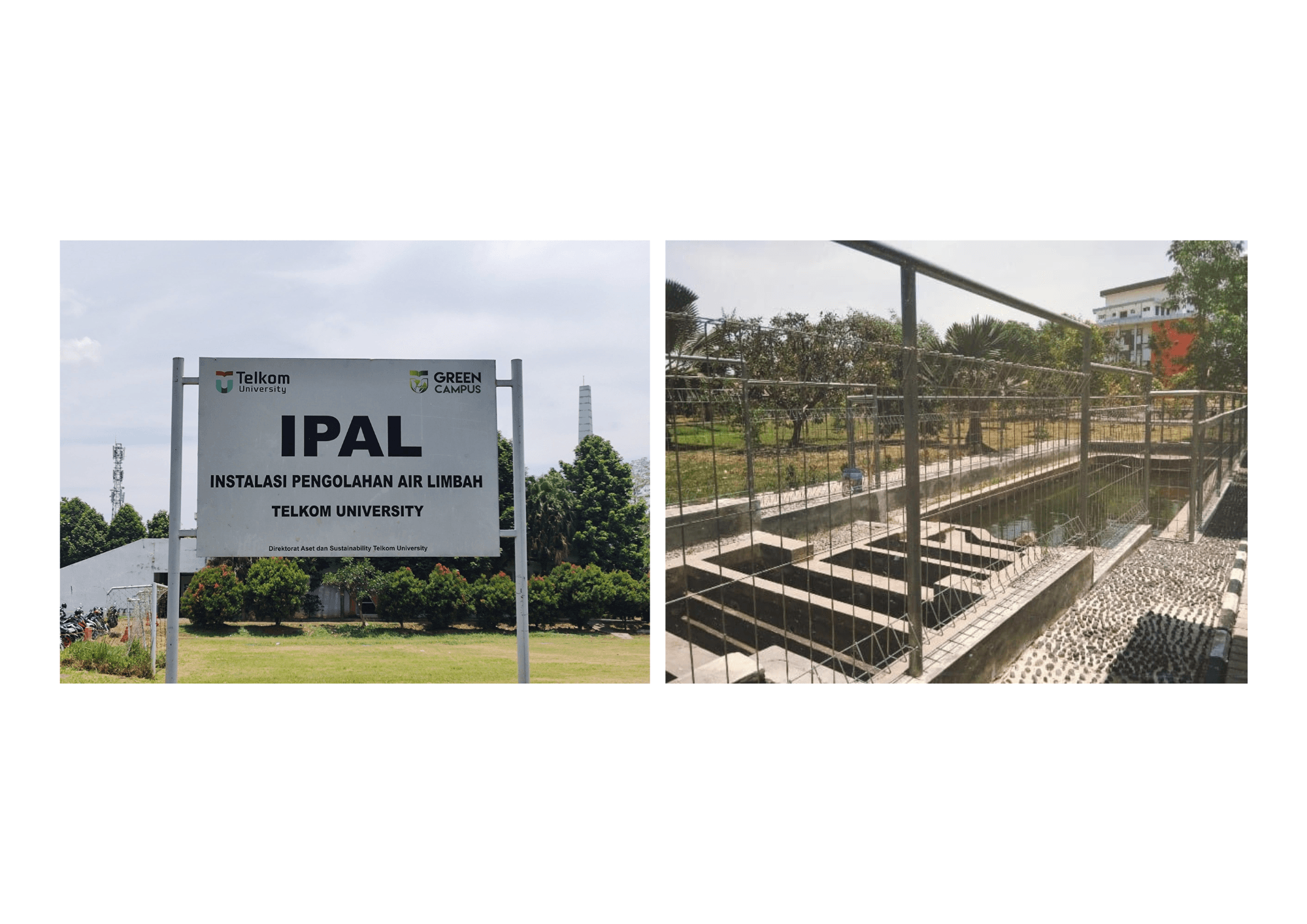
Telkom University continues to demonstrate its strong commitment to sustainability and environmental management through the development of an integrated wastewater and water conservation system. In 2024, the campus operates 28 units of Sewage Treatment Plants (STP) and passive IPAL (Wastewater Treatment Plants) to process domestic wastewater from buildings and laboratories, supported by a central IPAL that serves as a final filtering facility before the effluent is discharged into Lake Tekno. Through these integrated systems, Telkom University effectively manages rainwater, groundwater, and wastewater to ensure environmental safety and long-term sustainability.
Comprehensive Environmental Infrastructure
Every building at Telkom University is equipped with a sewage disposal system for both toilets and laboratories. Treated water from these decentralized systems is channeled to a water filtering section and subsequently directed to Lake Tekno, the campus’s main reservoir. A key innovation lies in the reuse of recycled water for multiple non-consumptive purposes including watering gardens, toilet flushing, vehicle washing, irrigation of productive land, aquaculture, and even supplying the university’s water park and drinking water production pilot project.
In addition, the campus integrates infiltration wells to support groundwater recharge, allowing rainwater from rooftops and paved areas to seep naturally into the soil. This helps maintain hydrological balance while reducing surface runoff and flood risk within the campus area.
Pollution Prevention and River Water Management
Telkom University also implements a pollution prevention mechanism for water entering the campus area from surrounding rivers. The incoming river flow undergoes multi-stage treatment through the Wastewater Treatment Plant (IPAL) before being released back into the environment.
The flow of river water treatment through IPAL(Wastewater Treatment Plants) involves the stages :
- Initial sedimentation to remove suspended solids,
- Biological treatment for organic matter reduction,
- Chemical filtration for neutralizing harmful elements, and
- Final polishing through the central IPAL before discharge into Lake Tekno.
This process ensures that all river water passing through the campus meets quality and safety standards prior to being released, reinforcing the university’s commitment to pollution control and sustainable water governance.
Wastewater from Cafeteria and Laboratory Installations
Specific waste streams, such as those from cafeterias and laboratories, receive specialized treatment. Cafeteria wastewater which often contains grease, oil, and detergent residues passes through a grease trap system, while laboratory effluents that may include heavy metals or inorganic compounds are processed through chemical neutralization installations before being discharged into the main wastewater channel.
This separation ensures that hazardous substances are neutralized effectively, preventing environmental contamination and ensuring safe wastewater discharge.
Through its integrated approach combining sewage treatment, infiltration wells, river pollution prevention mechanisms, and water reuse systems Telkom University effectively manages rainwater, groundwater, and wastewater within a unified environmental framework. This comprehensive system not only meets national wastewater quality standards but also maximizes the use of treated water for non-consumptive applications, reduces dependency on external clean water sources, and ensures both safety and sustainability across the campus ecosystem. By integrating innovation, infrastructure, and environmental responsibility, Telkom University continues to lead as a model for sustainable campus water management in Indonesia.
keywords: Sustainable Wastewater Management, Resource Optimization, Environmental Innovation
#THE Sustainability Impact Ratings 2026
Bagikan Artikel
0Komentar