THE Sustainability Impact Ratings 2026
9 September 2024
2 menit
Dilihat 0x
Telkom University Provides Water Management Educational Opportunities for Local Communities
Technology-Driven Water Conservation on Campus Telkom University has implemented a comprehensive water conservation and management system across its campus to ensure efficient use and sustainable dist...
SPenulis: SDGS Telkom UniversitySEditor: SDGS Telkom University
Technology-Driven Water Conservation on Campus
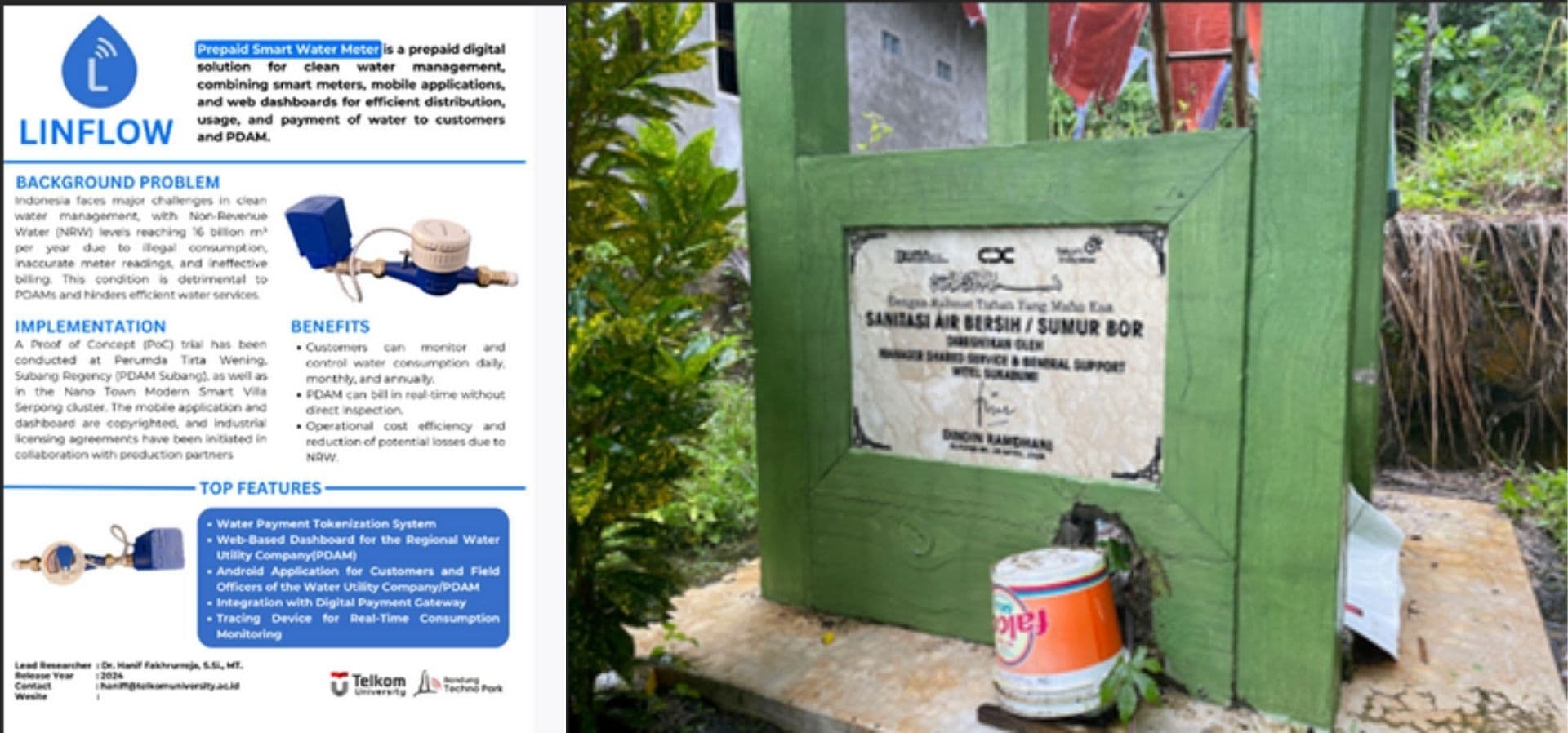
Telkom University has implemented a comprehensive water conservation and management system across its campus to ensure efficient use and sustainable distribution of water resources. Each building is equipped with infiltration wells that allow rainwater to naturally recharge groundwater, while wastewater is directed to a 15-cubic-meter filtration reservoir before being discharged into Lake Tekno, the university’s main reservoir. The treated water is reused for landscape irrigation and maintenance, achieving a reuse rate of approximately 656 cubic meters per day, effectively meeting the university’s daily water consumption. To enhance efficiency and transparency, Telkom University integrates smart monitoring technology through the Prepaid Smart Water Meter System, developed by Dr. Hanif Fahruroza from the Faculty of Industrial Engineering. This innovation, connected to the L-Connect App, enables real-time digital monitoring of water use, ensuring efficiency, accountability, and continuous improvement in sustainable water management.
Community Education Through the SAB Moneva Program
Beyond campus operations, Telkom University extends its expertise to the wider community through educational and participatory water programs.
One of its flagship initiatives, the Sarana Air Bersih (SAB) Moneva 2024 Program, focuses on Clean Water Facility Monitoring and Evaluation in collaboration with local residents.
One of the Clean Water Facility (SAB) installations supported by Telkom University in Sukabumi.
The 2024 evaluation covered 17 clean water facilities across various rural areas, revealing that most locations met national standards for daily water use, with several even achieving drinking-water quality levels.
The program also included community education sessions on sanitation, infrastructure maintenance, and water resource management—empowering residents to maintain and sustain their water systems independently.
Through this initiative, Telkom University not only ensures the availability of clean water but also strengthens community awareness of climate resilience, sustainable city living (SDG 11), and responsible consumption (SDG 12).
Research, Training, and Student Innovation
Telkom University regularly organizes workshops, research-based community service (Pengmas), and student-led innovation programs such as Innovillage, which focus on enhancing public understanding of water conservation, sanitation awareness, and the application of modern technology for sustainable water management. These programs serve as hands-on learning platforms connecting academic research with community needs, fostering long-term impact on rural and urban water systems alike, and supporting sustainable cities and responsible production cycles.
Conclusion
Through the combination of technological innovation, educational outreach, and community collaboration, Telkom University continues to foster sustainable water practices both on and off campus. By empowering local communities with knowledge and tools for efficient water management, the university strengthens its leadership in environmental education and sustainability, contributing directly to SDG 6 (Clean Water and Sanitation), SDG 11 (Sustainable Cities and Communities), and SDG 12 (Responsible Consumption and Production). These ongoing efforts reaffirm Telkom University’s role as a catalyst for sustainable change, inspiring a cleaner, more resilient, and environmentally responsible future for Indonesia. In this year, technology-based water management system is breakthrough programs compared to last year.
Access the full supporting documentation here:
PELATIHAN PENGOLAHAN AIR HUJAN DAN ATAU AIR KERAN
source image: DCS Telkom University
#THE Sustainability Impact Ratings 2026
Bagikan Artikel
0Komentar