THE Sustainability Impact Ratings 2026
28 Juni 2024
2 menit
Dilihat 0x
Telkom University Publishes Progress on SDG 14: Life Below Water Through Innovation and Community Empowerment
Sustainable Fisheries and Community Empowerment One of the flagship initiatives under SDG 14 is the Crab House Program in Ambulu, Cirebon, which exemplifies sustainable fisheries management through a ...
SPenulis: SDGS Telkom UniversitySEditor: SDGS Telkom University
Sustainable Fisheries and Community Empowerment
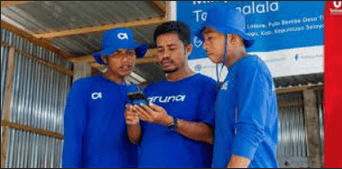
One of the flagship initiatives under SDG 14 is the Crab House Program in Ambulu, Cirebon, which exemplifies sustainable fisheries management through a silvofishery model that integrates aquaculture with mangrove conservation.
This program has empowered over 450 local fishers to manage crab farms using environmentally friendly methods. By adopting Internet of Things (IoT) technology to monitor salinity and water temperature, the initiative maintains ecological balance while improving production efficiency and reducing environmental impact.
Beyond economic benefits, the program supports the preservation of mangrove forests as vital habitats for marine biodiversity, aligning with Telkom University’s broader goal of fostering a resilient blue economy.
Research and Technological Innovation for Marine Sustainability
Researchers from the Faculty of Electrical Engineering and the Faculty of Applied Sciences have implemented projects such as the IoT-based Water Quality Monitoring System for shrimp aquaculture and the MahawQIOT (Mahakam River Water Quality Monitor System).
These projects integrate smart sensors and data analytics to improve water quality, optimize fish farming, and enhance the resilience of aquatic ecosystems.
In addition, faculty members have produced internationally recognized research supporting marine conservation, including:
- “Unlocking Insights from Ministry of Marine Affairs and Fisheries Annual Reports Using Latent Dirichlet Allocation: A Deep Dive into SDG 14” (TELKOMNIKA),
- “Deep Neural Network-Based Prediction of Tsunami Wave Attenuation by Mangrove Forests” (MethodsX), and
- “An Efficient Two-Dimensional Non-Hydrostatic Model for Simulating Submarine Landslide-Generated Tsunamis” (Ocean Engineering).
These studies strengthen the scientific foundation for marine sustainability, disaster risk reduction, and climate adaptation through data-driven innovation.
Commitment to Transparent SDG Reporting
By publishing progress against SDG 14 within the SDGs Report 2024, Telkom University demonstrates its dedication to transparency, accountability, and continuous improvement in environmental sustainability.
This approach reflects the university’s alignment with the United Nations Sustainable Development Goals (UN SDGs) and its contribution to Indonesia’s national marine conservation agenda.
Through a combination of academic research, technological advancement, and community collaboration, Telkom University continues to lead efforts in advancing marine ecosystem resilience, promoting digital transformation for environmental monitoring, and empowering coastal communities toward a more sustainable and inclusive blue economy.
source image: DCS Telkom University
#THE Sustainability Impact Ratings 2026
Bagikan Artikel
0Komentar