THE Sustainability Impact Ratings 2026
8 Juni 2024
2 menit
Dilihat 0x
Telkom University’s SDG 11 Report: Advancing Sustainable Cities and Communities through Education and Innovation
Aligned with SDG 11, Telkom University actively contributes to creating inclusive, safe, resilient, and sustainable urban environments through education, technology, and community empowerment. One of ...
SPenulis: SDGS Telkom UniversitySEditor: SDGS Telkom University
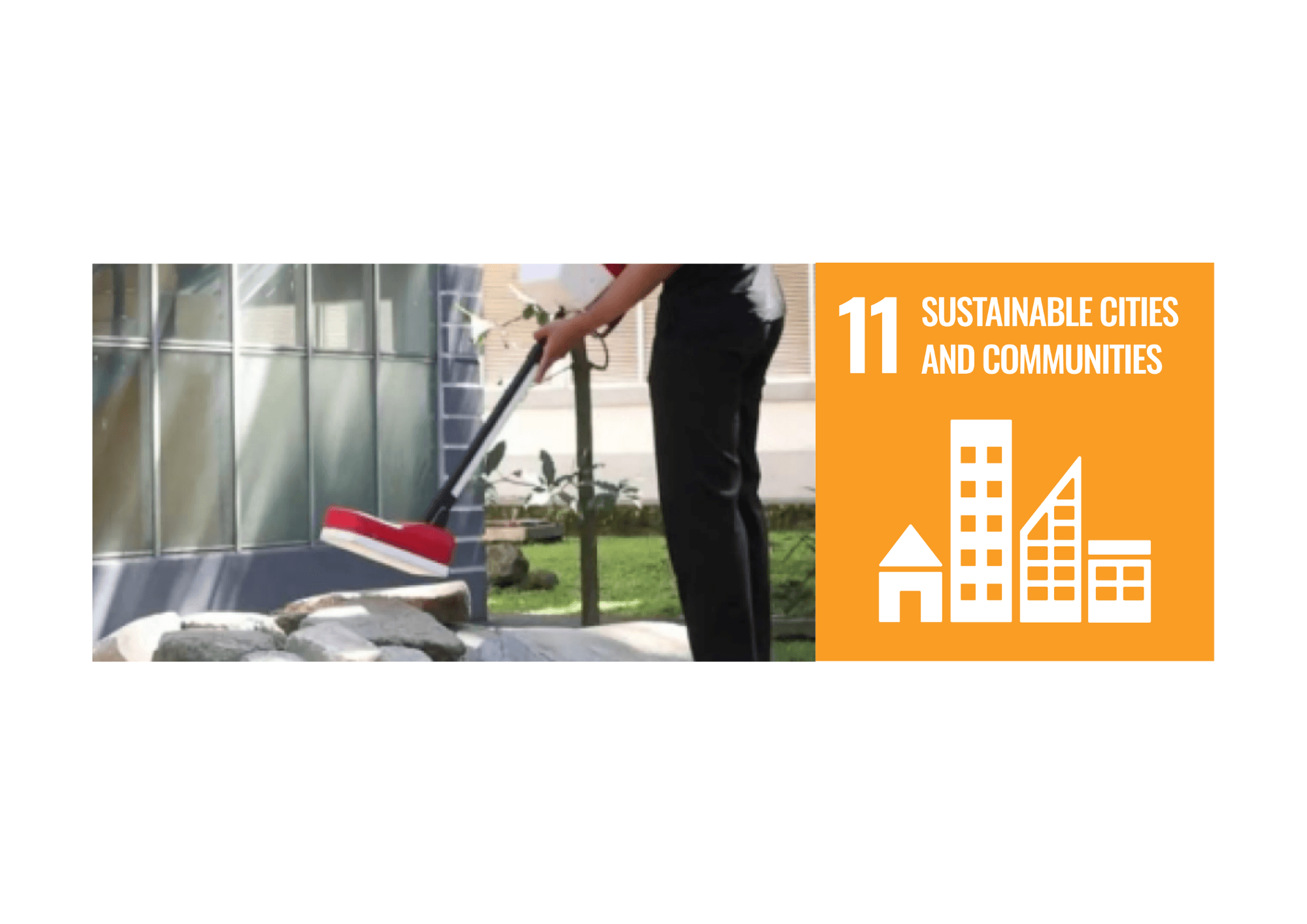
Aligned with SDG 11, Telkom University actively contributes to creating inclusive, safe, resilient, and sustainable urban environments through education, technology, and community empowerment. One of the major initiatives under this commitment is the Universal Design-Based Landscape and Facade Planning for the Griya Harapan Difabel Service Center in Cimahi City, led by the Faculty of Creative Industries. This project incorporates universal design principles to build accessible spaces for people with disabilities, strengthening inclusivity and equality in urban infrastructure.
The Faculty of Industrial Engineering has also developed an application for mapping local wisdom to support P5 learning at SMAN 5 Bandung, enabling digital preservation and dissemination of local cultural values. Meanwhile, the Faculty of Economics and Business conducted a video and poster competition on SDG 11.6, which focused on urban waste management and circular economy practices in Cipaganti, Bandung. The initiative encouraged students and local communities to adopt environmentally responsible behaviors through creative learning and public participation.
In addition, the Faculty of Applied Sciences implemented a Waste-to-Energy Incinerator System at waste collection points along the Citarum Harum River, equipped with an IoT-based monitoring system that converts waste into renewable energy while ensuring real-time environmental monitoring. This innovation illustrates how digital technology and environmental engineering can be combined to address critical sustainability challenges in urban areas.
All these programs are implemented under Telkom University’s Digital Collaboration for Sustainability (DCS) framework, which adopts the penta-helix collaboration model—bringing together academia, government, industry, community, and media. Through this collaborative ecosystem, Telkom University continues to strengthen its role as a national hub for innovation and sustainability, supporting Indonesia’s transition toward smart and sustainable cities.
By consistently publishing SDG progress reports per SDG, such as this one for SDG 11 – Sustainable Cities and Communities, Telkom University demonstrates institutional transparency and its ongoing contribution to advancing the SDGs.
Through continuous innovation, education, and collaboration, Telkom University not only promotes urban sustainability but also inspires communities to thrive in harmony with inclusivity, technology, and environmental stewardship.
#THE Sustainability Impact Ratings 2026
Bagikan Artikel
0Komentar