THE Sustainability Impact Ratings 2026
8 Juli 2024
2 menit
Dilihat 0x
Telkom University Strengthens Sustainable Agriculture through Research Innovation and Farmer Collaboration
GreenTech and SIVIFO: Advancing Agricultural Research for Global Impact The SIVIFO (Sustainable Innovation for Future Opportunities) program, under Telkom University’s GreenTech initiative, plays a pi...
SPenulis: SDGS Telkom UniversitySEditor: SDGS Telkom University
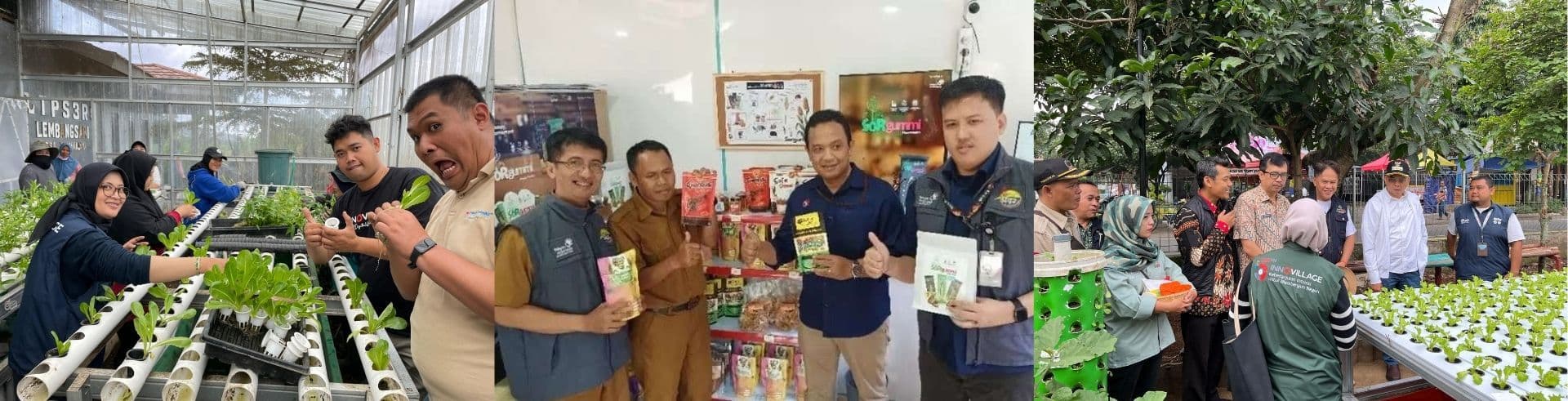
GreenTech and SIVIFO: Advancing Agricultural Research for Global Impact
The SIVIFO (Sustainable Innovation for Future Opportunities) program, under Telkom University’s GreenTech initiative, plays a pivotal role in driving research, development, and innovation to tackle both local and global challenges in the agricultural sector. Guided by its mission to foster a collaborative ecosystem among academia, industry, government, and society, SIVIFO aims to build a knowledge- and technology-driven transformation framework.
Aligned with the Sustainable Development Goals (SDGs), particularly SDG 2 (Zero Hunger) and SDG 12 (Responsible Consumption and Production), this program promotes impactful and sustainable initiatives to strengthen food security and environmentally responsible farming. By connecting research outputs with field implementation, Telkom University ensures that innovation translates into tangible benefits for farmers and food producers.
Sorgumology Lab & Showcase: A Real Contribution to Food Security
One of the flagship collaborations under this initiative is the Sorgumology Lab & Showcase, launched jointly by Telkom Indonesia and Telkom University at the Faculty of Applied Sciences (FIT) Tel-U.
This program, part of Telkom Indonesia’s CSR initiative, focuses on enhancing the production quality and marketing potential of sorghum plants, in partnership with the Kelompok Wanita Tani (KWT) in Bojongmanggu Village, Bandung Regency.
Telkom University provides research and technical assistance, including guidance on sorghum seed cultivation, planting techniques, and post-harvest processing to ensure optimal yields. Beyond improving agricultural practices, the Sorgumology Lab also promotes product diversification—transforming sorghum harvests into various processed goods with attractive and modern packaging, thereby increasing their market value.
Additionally, the marketing of sorghum-based products is supported both offline through the Sorgumology Showcase and online via e-commerce platforms such as Shopee and Tokopedia, empowering local farmers—particularly women-led groups—to participate in the digital economy.
Conclusion
Through GreenTech, SIVIFO, and the Sorgumology Lab, Telkom University actively facilitates access to its laboratories, technologies, and agricultural expertise for local farmers and food producers. These initiatives not only advance sustainable farming practices but also support community empowerment, food security, and economic resilience.
By integrating research innovation, digital technology, and inclusive collaboration, Telkom University continues to play a crucial role in fostering sustainable agriculture that aligns with national priorities and the global SDGs agenda.
#THE Sustainability Impact Ratings 2026
Bagikan Artikel
0Komentar