Kumpulan update dan informasi terkini seputar SDGs.
2 SDG dipilih
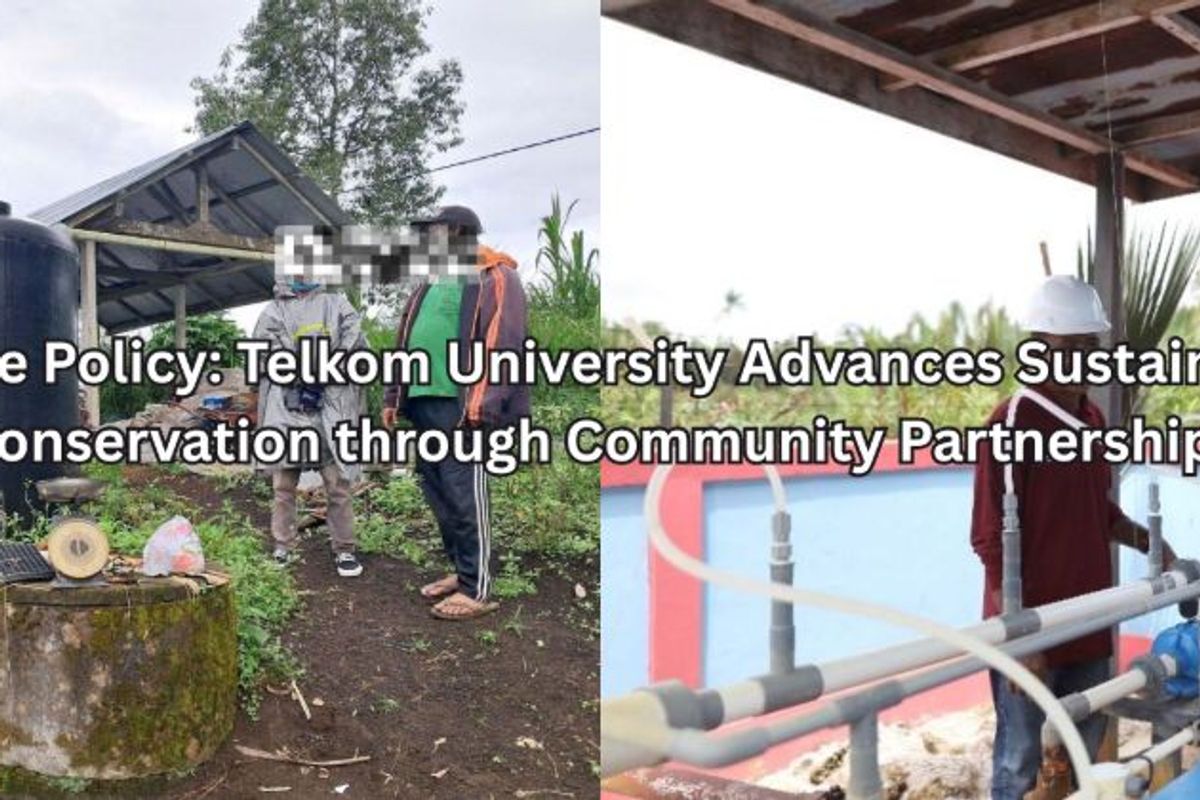
Bandung – Throughout 2025, Telkom University ran at least nine community service programmes that taught villagers and farmer groups about fresh-water ecosystems. The programmes covered water-efficient irrigation, village water management, water source conservation and water quality management for fish farmers. The activities were funded through the university's internal community service grants. Most fall under the Appropriate Technology scheme, Period I 2025, set out in Decree of the Vice Rector for Research, Innovation and Partnerships No. KWR4.072/ABD04/PPM-JPM/2025. The others ran under the Village Partnership (Desa Binaan) scheme. The programmes reached local communities in West Java, Central Java and East Java. Lecturers and students from the Bandung, Purwokerto and Surabaya campuses worked directly alongside residents.
Telkom University strengthened its student hunger interventions in 2025 through Jumat Berkah free meals and charity, healthy rebusan refreshments at university activities, balanced “4 sehat 5 sempurna” Ramadan meals with fruit, 61 canteen tenants across 7 campus locations, 24-hour vending machines, and sorghum outlets and free sorghum cereal in the faculties.
In 2025, Telkom University carried out 26 off-campus water conservation activities with farmers, villages and community groups. It installed IoT, LoRa and solar-powered drip and automatic irrigation, added water filtration and water-quality monitoring for fish farmers, and developed pipe-leak detection and digital water management for villages. It also evaluated community clean water facilities across Java through the Moneva SAB programme with PT Telkom Indonesia.
Aligned with SDG 2, Telkom University strengthens food security through sensor-based urban farming with a women farmers’ group in Bojongsoang, a Digital Twin system that increased rice field productivity by 22.8%, and affordable IoT aeroponics.
Aligned with SDG 14, Telkom University protects marine ecosystems through IoT-based water quality monitoring for sea turtle conservation, mangrove planting in Indramayu and Pangandaran, coastal clean-ups, and blockchain-based plastic waste management.
Bandung – Through its 2025 community service grants, Telkom University ran a series of outreach programmes that taught fishers, fish farmers and village tourism managers how to manage fisheries, aquaculture and tourism sustainably. The programmes reached communities in West Java, Central Java, East Java, Yogyakarta and Terengganu, Malaysia. The activities were funded under several internal schemes: Appropriate Technology, Mentoring and Training, and Village Partnership (Desa Binaan) for Period I 2025, each set out in a decree from the Vice Rector for Research, Innovation and Partnerships. An international collaboration scheme added outreach abroad. Lecturers and students from the Bandung, Purwokerto and Surabaya campuses worked directly with fishing communities, fish farmer groups, a conservation foundation and tourism awareness groups.
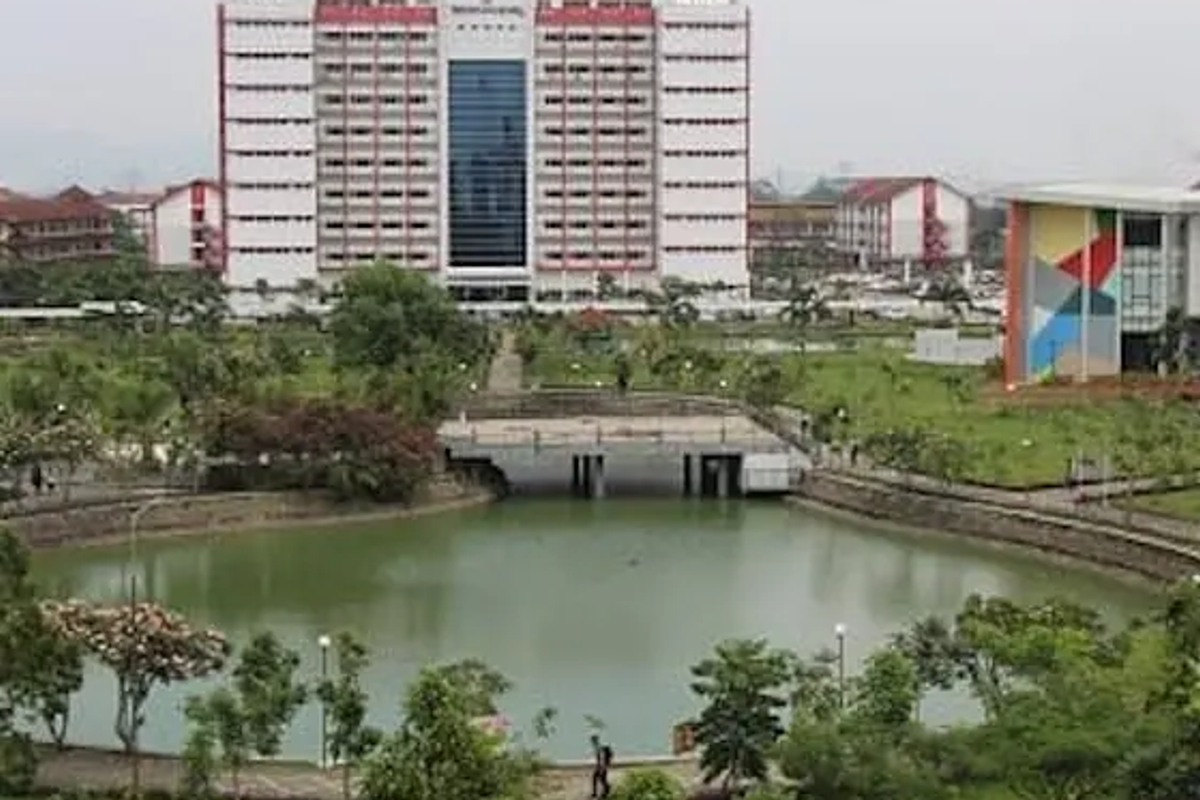
Water that enters Telkom University full of plastic and mud now leaves the campus clean. The university follows a staged plan to stop its 48-hectare campus in Dayeuhkolot, Bandung Regency, from physically, chemically or biologically altering the canal, lake and river that run through and past it. The campus sits on reclaimed rice fields, and a primary irrigation canal from the city of Bandung crosses it. The canal cannot be closed, and it arrives carrying farm and household waste from upstream. Rather than pass that burden downstream, the university treats the water in several stages before releasing it to the Cipurut River.
Telkom University is showing that caring for water can pay its own way. On campus, it has built a water management system in which clean canals, ponds and wetlands also produce fish, crops, compost and income that is put back into looking after the land. Beyond campus, it supports coastal and village communities that guard sea turtles, protect their coastline and teach children to care for the sea.
Telkom University monitors water quality across its campus, from canal to lake, and brings IoT water monitoring to communities through SiMonA freshwater aquaponics in Bandung and Crab Houses in Cirebon and Surabaya.
To ensure accurate and sustainable water resource management, Telkom University implements a comprehensive water measurement system across its campus. Each month, the volume of water extracted from individual artesian wells is recorded through water meters installed at each production site. These measurements are subsequently compiled to monitor overall water consumption throughout the university.
Rivers, canals and coastlines do not stop at a university's boundary, and neither does Telkom University's work to protect them. In 2024 and 2025, its lecturers and students worked side by side with riverbank residents, village governments, fishing communities and turtle conservation groups to look after the waters they share. The collaborations range from the Cikapundung River watershed, which feeds the irrigation canal running through the campus, to neighbouring villages in Dayeuhkolot and Bojongsoang and coastal communities in East Java, Yogyakarta and Lampung. They are funded through the university's community service grants, the Ministry of Education, Culture, Research and Technology, and Telkom Indonesia's Innovillage and CSR programmes.
elkom University treats every type of wastewater on campus according to its characteristics before the water is reused or discharged. The aim is to uphold water quality and protect the ecosystems, wildlife and people downstream. The campus now runs 22 wastewater treatment installations covering its 53 designated wastewater management locations. Toilet, laboratory, cafeteria and rain water each follow a different treatment route, and much of the treated water is reused on campus instead of being released.